
Restaurant grease traps are the kind of equipment that get inspected once a year and forgotten for the other 364 days — until the health inspector arrives, the trap is overdue for service, and the kitchen is suddenly facing a violation that threatens the operating permit. The good news is that grease trap compliance is one of the most predictable parts of restaurant operations once you understand the rules.
Here is what restaurant operators in Southern California need to know about grease trap sizing, service intervals, paperwork, and how to stay compliant year-round.
Why grease traps exist
Fats, oils, and grease (FOG) coat the inside of municipal sewer lines, harden over time, and create blockages that overflow into streets, basements, and waterways. The EPA FOG management guidance documents the impact: FOG-related sewer overflows are the leading cause of municipal sewer backups nationwide. Restaurants are the largest contributors.
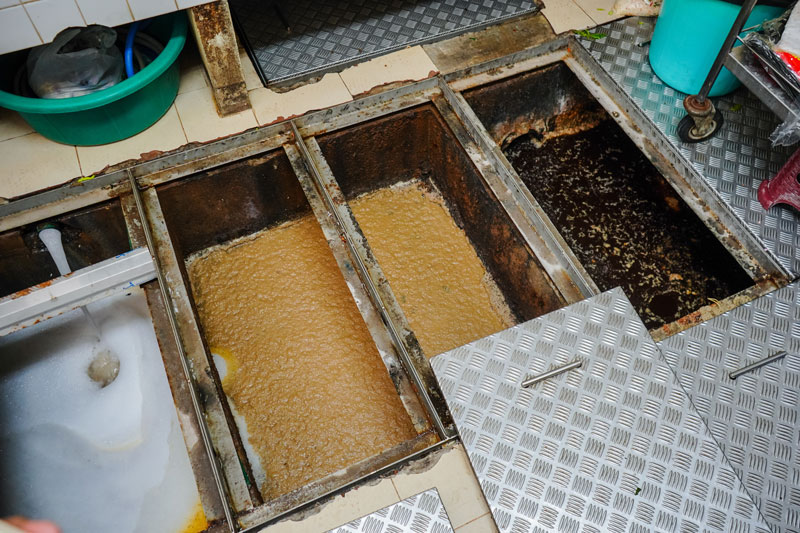
Grease interceptors and traps separate FOG from kitchen wastewater before the wastewater enters the public sewer. They work by gravity — FOG floats, solids sink, and water flows through the middle. The trap holds the FOG and solids until they are pumped out.
Sizing the trap correctly
Trap size is regulated by your local health and wastewater authorities. The basic rule: trap capacity must match the kitchen waste flow rate. Undersized traps fill quickly, lose efficiency, and let FOG pass through into the line. Oversized traps work fine but cost more to install and pump.
Most quick-service restaurants need 750-1,500 gallon exterior grease interceptors. Full-service restaurants with extensive cooking lines need 1,500-3,000 gallon units. Interior under-sink traps are appropriate only for very small kitchens or as a supplement to an exterior interceptor.
Service intervals
Most Southern California jurisdictions enforce the “25% rule” — the trap must be pumped when FOG and solids reach 25% of total capacity. Quarterly pumping is typical for high-volume restaurants. Monthly pumping is common for very high-volume kitchens (multiple deep fryers, heavy oil use).
Letting a trap go past the 25% threshold reduces separation efficiency and lets FOG enter the line. The hauler removes the contents, washes the interior, and provides a manifest documenting volume and disposal site.
The paperwork that matters
Keep every pumping manifest on file for at least three years. Health inspectors will ask for them. Wastewater districts may also audit. The manifest documents date of service, volume pumped, hauler license, and disposal facility — all required information.
Keep a maintenance log inside the kitchen showing trap inspection dates, observed grease levels, and pumping dates. Inspectors appreciate the proactive recordkeeping and it often translates to less aggressive enforcement.
Daily kitchen habits that affect compliance
Train kitchen staff on FOG handling. Used cooking oil goes to a dedicated waste container for recycling, never down the drain. Pans get wiped before washing. Floor mats and equipment cleaning waste should drain through floor sinks that route to the trap, not bypass it.
Avoid pouring boiling water down drains as a “cleaning” measure. It just liquefies grease and pushes it further into the line where it cools and solidifies in places harder to access.
Adjacent maintenance that pays off
Beyond the grease trap itself, the floor drains, sink drains, and main kitchen drain line need annual hydro jetting to clear residual grease buildup. The buildup is inevitable even with the best FOG handling — preventive cleaning keeps it manageable.
For kitchens that handle large quantities of product packaging, takeout containers, and food shipping, professional food-service packaging and container supply services address the operational side that feeds back into kitchen workflow and waste handling. For commercial kitchens preparing for a busy season or expanded operations, comprehensive commercial property maintenance and facility support services handle the trade scope around grease management — including floor finishes, drain grates, and plumbing fixtures.
If you fail an inspection
Most jurisdictions give 30 days to correct grease trap violations. The corrective action is usually emergency pumping, deep cleaning of the trap and contributing drains, and submission of an updated maintenance plan. Repeat violations escalate to fines and, in extreme cases, operating-permit suspension.
Your Southern California Restaurant Plumbing Specialists
At JTS Plumbing, we handle restaurant grease trap pumping, kitchen drain hydro jetting, and compliance documentation across Southern California — from small QSRs to multi-location chains. Contact us to set up a routine service schedule before your next health inspection. Our restaurant plumbing services cover the full Southern California region.